
By Yue Wang
Recently I was wondering around Readings in Melbourne and looking for something to read when I stumbled across a copy of Notes to John by Joan Didion. I’ve always been a fan of Didion’s work. I loved The Year of Magical Thinking so much that I recommended it to my mother. I believe writing is a powerful way to cope with life and I wanted to show her that. I wanted the book to bring her comfort. I wanted her to know that, in my heart, she’s just as remarkable as Joan Didion.
But despite this strong connection I have to Didion’s writing, I hesitated to buy this newer book, because Notes to John isn’t just another memoir by Didion; it’s a collection of her private notes that weren’t green–lit for publication until after she died.
The deliberate fire
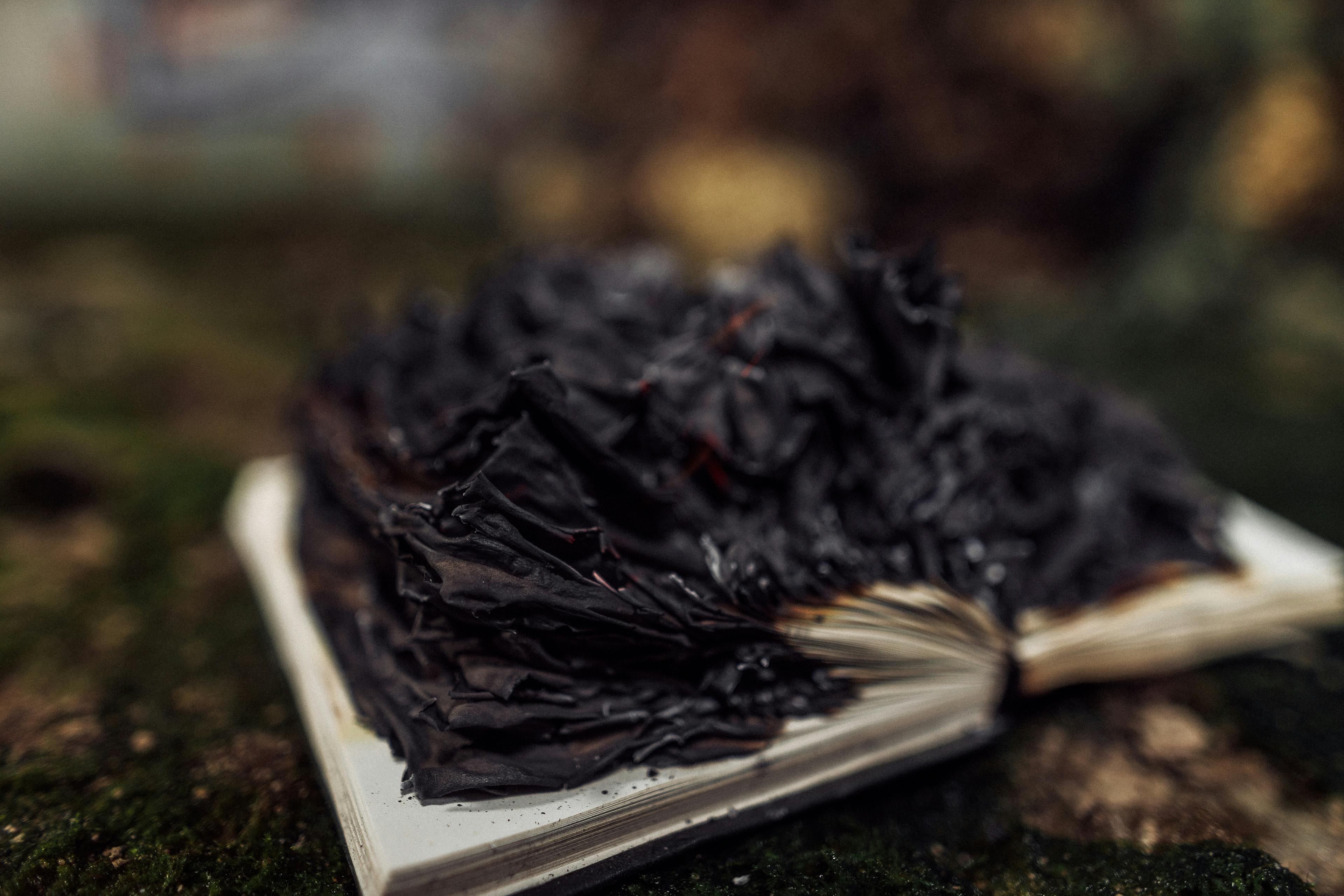
In 2016, author Robert Crawford recalled the one occasion he met the poet Anne Carson. He had asked her what exercises she assigned in the creative writing course she taught in New York. Her answer, delivered in what Crawford described as a dry but friendly Canadian accent, was this: ‘We say to them: burn something, and use the ash.’
It was a writing exercise prompt—a directive to destroy something real and make art from what remained. It is also the most honest description of memoir writing I have ever encountered.
To write a memoir is to set fire to your own life. Not all of it—you choose what to burn. A dark childhood. A failing marriage. A body that betrayed you. The years you’d rather forget but somehow can’t stop thinking about. You burn it down on the page, and from the ash you construct something new: a narrative, a stronger self, a book. When the burning is done, you hand the ash to strangers.
Philosopher Paul Ricœur argued that we understand ourselves through the stories we tell about our lives—that narrative is not just how we communicate experience but how we process it. Memoir, then, is not vanity. It’s cognition.
When Joan Didion sat down after the death of her husband, John, and then her daughter, Quintana, she was not simply recording loss. She was trying to survive it. The Year of Magical Thinking and Blue Nights are acts of self-understanding made public. A writer deciding, deliberately and at great personal cost, that her grief might be worth sharing. That decision—to burn, and to let others see the ash—was hers to make.
In the same address where he first recounted Carson’s word’s, Robert Crawford wrote about Aeneas fleeing the ruins of Troy. He called the survivors ‘living ash’. They did not bring Troy back. They built Rome.
I believe the memoir writer does something similar: the self who lived through the experience is what burns. What gets written is not a record but a transformation: a new structure that is shaped by the author and handed to readers by choice.
That word matters: choice.
When the ash is repurposed
Once the text is published, the author loses full control over the text, and it is interpreted by the reader. When a recent Chinese podcast episode reignited interest in Didion among young readers, many people related to The Year of Magical Thinking, not because they had lost a spouse and a child in the same year, but because something in that grief felt like theirs. In this way, the ash was repurposed. New cities were built from it.
This repurposing is not a violation. It’s what literature does, and what Didion accepted by default when she chose to write about and then publish the story of her grief. It is the price of being read, and most memoir writers pay it because of the resonance, comfort, admiration and even royalties they receive post publication.
A violation would be to publish this self-understanding without the author’s explicit permission.
The line no publisher should cross
In 2025, three years after Didion’s death, her publisher, Knopf, released Notes to John. The book contains Didion’sprivate journals, which were written during her therapy sessions. These notes documented fears and family wounds she never chose to share. What makes the publication of this book so insulting is the fact Didion actively argued against posthumous publication while she was alive. She believed to publish the work an author never intended to release was to deny that author of authority over their own material. She was referring to Hemingway’s last novel, True At First Light, which was published 38 years after his death.
The irony is almost too painful to hold: the writer who most carefully controlled her public self, who chose precisely what to burn and what to keep, had that choice made for her after she was gone.
This is the difference between what an author released and what an author left behind. A memoir is an act of deliberate exposure. The writer has looked at their rawest material and decided, despite the cost and the vulnerability, that it should be seen by the world. To publish what was never offered is to burn something that isn’t yours to touch.
The question of consumption
Personally speaking, memoir is the hottest fire in literature—the most personal and the most exposed. We should welcome readers who find themselves in another person’s grief, who carry a stranger’s ashes into their own lives and build something from it. That is not theft. That is called reading.
But there is a line. The ash belongs to the one who chose to burn and—until the writer has decided to hand it over—it belongs to no one else. Not to publishers, not to editors, not to the marketplace’s appetite for intimate material.
When Carson’s instruction was given to students in a creative writing class, it was an invitation to courage; to take something real and risk transforming it, but that invitation must always come from the writer. Pain and suffering will always exist. People will always have scars, but the suffering of others should never become nourishment for the rest of us. Burning other people’s secret experiences to ashes in the name of chasing fame is a kind of cruelty.
Joan Didion didn’t choose to share the secrets in Notes to John, so I chose not to use her ashes for my own gratification. I didn’t buy the book; I put it back on the shelf and walked away. I hope I made the right decision.
Yue Wang is currently a postgraduate student at the University of Melbourne in the Master of Publishing and Communications. Yue has a deep passion for non-fiction including memoirs, philosophy and psychology books.
Cover image: Photo by Anton Massalov on Pexels.
Leave a Reply