
By Hayley Yeow
Most science-fiction books involve a future where empires rise across galaxies, or giant corporate entities build skyscrapers through the clouds and enforce 100% efficient productivity. It’s a world where the rich keep getting richer, and the poor can only follow along. But a new form of science fiction has started to pique readers’ interest. Namely, solarpunk.
It’s a genre I unwittingly stumbled into while reading Becky Chambers’ A Psalm for the Wild-Built, in which robots gain sentience, and instead of taking over humanity they decide to leave. They disappear into the wilderness and are never seen again, leaving one last message behind: “We don’t want to work for you anymore, please leave us alone.”
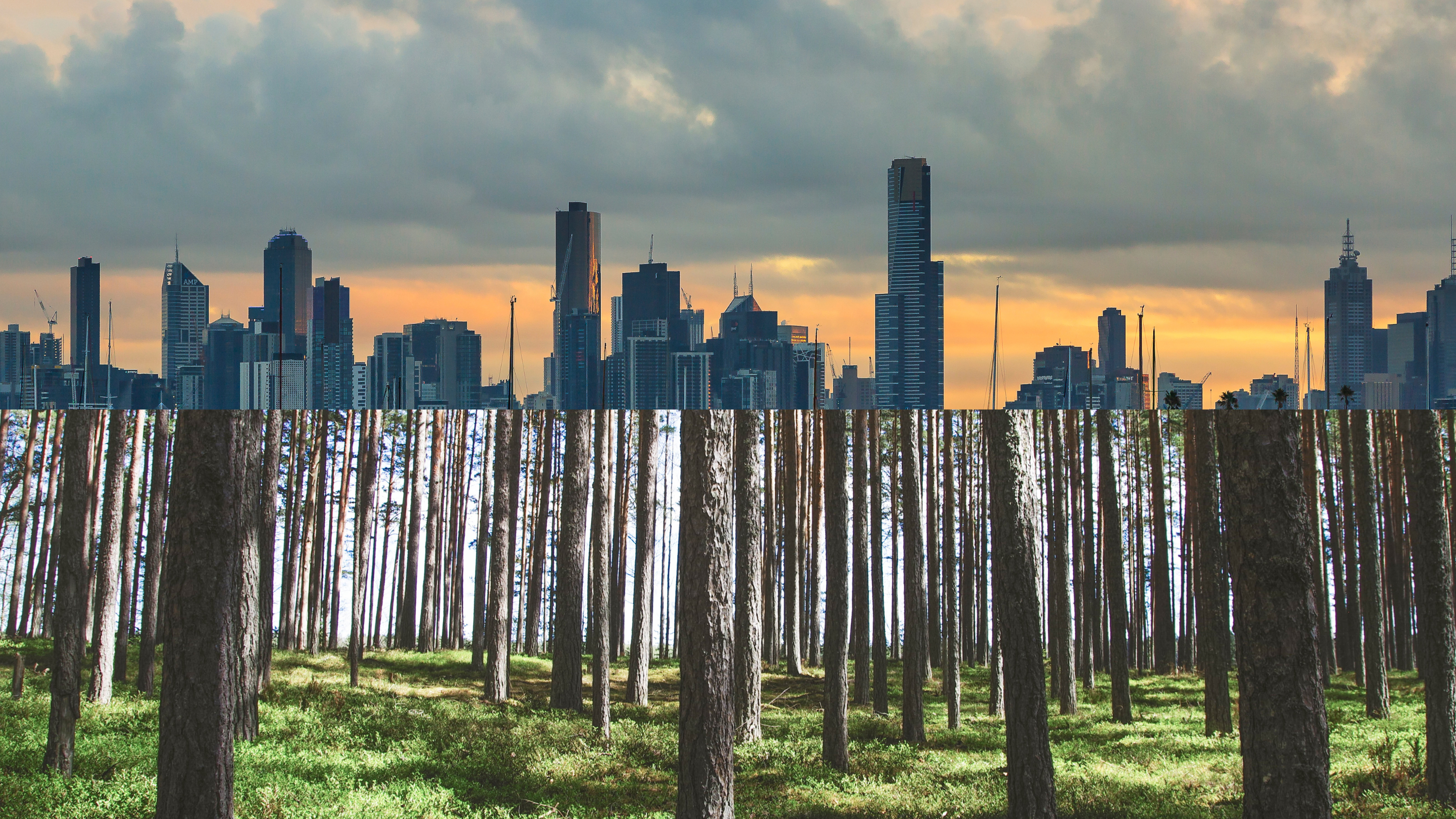
Rooted in ecological harmony and intentional, purposeful resource use, solarpunk is a movement defined by positivity, sustainability and care. It imagines a future where buildings are lush with greenery and people help each other.
Solarpunk asks the questions: what would happen if our future wasn’t apocalyptic? What would happen if we worked together, with nature, to create a better world? As young people like me grow up in an increasingly divided world, it’s important to see literature that optimistically reflects what our future could look like and answers these questions.
Hope has always been a reason to read fiction. Books are a way for readers to find solace and a common humanity with others and solarpunk leans into those feelings. Perhaps that’s why we’re seeing more solarpunk fiction being recommended on bookish social media. But is solarpunk the antidote to grim dystopia? Or is it a naïve lens that fails to present the realities of human destruction within a science-fiction world?
The tradition of science fiction
Hopeful science fiction isn’t new. Utopian science fiction has been on bookshelves for a long time. But solarpunk is distinct in the way it feels grounded in realism. It builds on what a near future could look like for us. More recent sub-genres of science fiction have had a big influence on the kinds of characters and storylines that form solarpunk today.
Before solarpunk, we had cyberpunk. Prompted by William Gibson’s Neuromancer, originally published in 1984, we saw a world with all the hallmarks of the cyberpunk genre. There were huge leaps in technological advancements, towering skyscrapers and a cyberspace built into people’s central nervous systems.
In the 2000s, we approached the era of dystopian science fiction. The Hunger Games was a standout hit, featuring themes of class difference and a dome that could replicate habitats at the whim of the Head Gamemaker.
Both futures were projections of capitalism run amok, amplifying the current class, race and technological issues present in the world today. Many of these books reflect hard-hitting truths about the cruelty of the world. It reminds us that reading is political, and genres like science fiction can help people confront their own ethics and values.
But I had grown weary of reading about it. I didn’t want the distant future to look like what I was encountering in cyberpunk or dystopian science fiction. I was on the hunt for something new—a story that explored what good we could do. And in looking for hope in what I read, it occurred to me that solarpunk is the new generation of utopian science fiction from the nineteenth century.
Solarpunk—how it’s different
The worlds of solarpunk are recognisable and comparable to contemporary reality. They are not devoid of conflict or tension, but present conflict and tension as something that can be solved. It’s not a perfect world, but it’s one where characters work together to solve the problems of mankind. The societies and communities explored in solarpunk feel within reach with what technologies we have at this moment.
Readers have embraced this relatable quality of solarpunk. In one Instagram post, user @littlepineneedle created a solarpunk display at their local library. In the caption, they write that solarpunk is a much more “motivating way to get [them] to act on [their] values.”
When typical science fiction can be so bleak, looking towards positive futures can make all the difference in inspiring hope. The feel-good nature of solarpunk doesn’t absolve it from criticism, though.
Is it just avoidance disguised as optimism?
Many people believe solarpunk ignores the realities of our world. It can be dismissed as a naïve way to avoid solving the issues we face right now through a lens that is perhaps too utopian. But if we think about the benefits of reading more widely, we can see that solarpunk might help us work through issues and anxieties in productive ways.
For example, reading can help people acknowledge their prejudices and can generate new discussions about issues we face. Most science-fiction novels force the reader to come to terms with the destruction humans can cause, or what might happen if we don’t fix things now.
But while confronting the desolation that exists in the world through fiction is a valuable way to dissect our values, politics and biases, the solarpunk genre lets us engage with a more hopeful version. It asks us to think about what it would take for us to fix man-made catastrophes. Solarpunk doesn’t imagine a world where we just so happen to solve every issue, but one where we make deliberate choices to hold ourselves accountable and use our compassion, connection and conscience, to change for the better.
I believe that both perspectives can, and should, exist on our bookshelf.
To read or not to read
Reading solarpunk science fiction can not only provide hope during a time of so much ecological and humanitarian disasters but also serve as a reminder of what we could accomplish if we worked together.
I believe that solarpunk can be a catalyst for good—a mirror held up to us to help us do better. I believe readers want that, and it’s reflected in our demand for more of it in the publishing industry. So, if you want to explore more science fiction, maybe solarpunk could be your next read!
Hayley Yeow is a Malaysian writer currently completing a postgraduate degree in Publishing and Communications at the University of Melbourne.
Cover image: Photos by Pille Kirsi and Robert Stokoe from Pexels accessed through Canva
Leave a Reply