
By Samantha Sirimanne Hyde
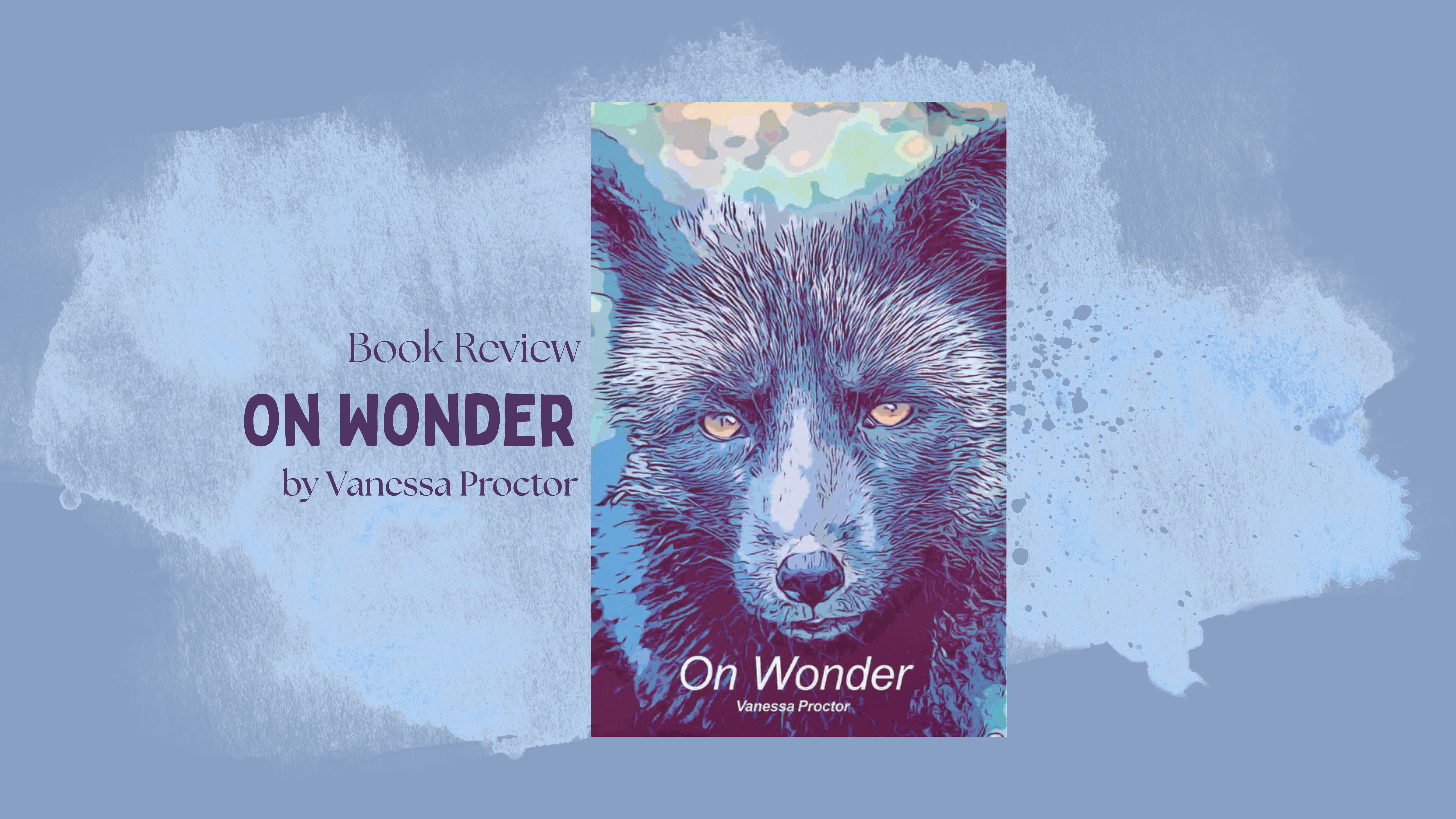
On Wonder is Vanessa Proctor’s first collection of free verse, released by Walleah Press in December 2024. A founding member and a recent past President of the Australian Haiku Society, Proctor is an internationally acclaimed multi-published poet, editor and mentor. Her publishing credits include the chapbooks Temples of Angkor and Jacaranda Baby as well as a book of haiku, Blowing Up Balloons: Baby Poems for Parents, cowritten with Gregory Piko.
On Wonder delves into the marvel of wonder in all its dimensions. Amazement, astonishment, admiration, respect and curiosity are all woven into her inspiring and lucid poems. The last lines of the opening poem encapsulate the essence of the collection: “everything is stripped down/to reveal this moment, this place, this now.”
Proctor has been a practising haiku poet for more than three decades, and her intuitive ability to uncover the magical element of nature and the minutiae of daily life invigorates these pages. She shares this with us in the whimsical, “Citizen Science”: “I am a student of small things, insects, / Frogs, a student of one particular frog.”
Proctor’s insightful observations, dotted with humour, span a broad array of topics and timelines. They depict her gentle presence within diverse locations like cityscapes, countrysides, cafes, museums, gardens and bodies of water, while her poetic lens often spotlights minute details or aspects. Like the “pay binoculars” in “Scenic”, her poems encourage readers to “really see” beyond a cursory glance at what is around us.
In “Four Minutes”, Proctor invites the reader to enter the Science Museum, London, to reflect on objects and photos of a maritime calamity:
“On the walls the disaster
is announced in bold print,
story after story –
but there are other stories
in the creases of photos,
the rip in a lifejacket,
tales deep within a lifeboat’s timbers.”
“Waking Dream” and “Ashridge Forest” stand out for their emotionally impactful stories exploring other essences of “wonder”— bewilderment, uncertainty and confusion of a child feeling abandoned. Social unease and feelings of inadequacy present themselves through subtle imagery and evocative language.
In Proctor’s many ekphrastic and semi-ekphrastic poems relating to paintings and photographs, we’re transported back through sensory, filmic detail to Japan to meet Murasaki Shikibu, a Japanese writer and court lady at the Imperial court in the Heian period. We encounter historical figures like “The Skating Minister”—the Reverend Robert Walker (after a painting attributed to Sir Henry Raeburn) and absorb the overwhelming despair in “Endless Night—Budapest, 1944”. In “Le Stryge”, the ornamental sculpture adorning Notre-Dame Cathedral, the poet muses from the gargoyle’s high vantage point and comments about the current state of affairs:
“Now there is nothing, rien, the city deserted.
La Seine, sluggish and impervious,
flows past empty streets and empty squares
…
Some idiot gilding me with a surgical mask.
Even in my heart of stone, I have feelings.”
Many of Proctor’s poems are imbued with the Japanese notion of ikigai—the meaning of one’s life, what is important and gives one joy and purpose. This concept comes alive in poems like “At the Australian Museum”, “Beading”, “Wegberg 1980’’, “Emergence” and Whale Psalm” where the reader is privy to precious moments from the poet’s childhood and with her children. “The Gift” shares the joy and sense of fulfilment of taking a moment for yourself.
The collection is peppered with poems such as “Fingal Spit”, “Fitzroy Falls” and “In Praise of Ocean Swimmers”, featuring the life-giving force of water in all its manifestations offering us glimpses of Proctor’s powerful attraction to it.
The Japanese perception of sadness, particularly a tender, contemplative sadness, is often defined by the term ‘mono no aware’. This is often rendered as the pathos or frailty of all things: an understanding of the impermanence of all matter and the wistful reaction that comes from its acceptance. Proctor’s poetry is often touched with this leitmotif of finding beauty in what’s blemished, fragile or ephemeral. For instance, cherry blossoms, which epitomise beauty, transience and renewal in Japanese culture, are depicted in the poem, “The Scattering of Blossom”, shifting between life and death, beauty, sorrow and acceptance. The poem moves from Australia, where the cherry trees bloom along Sakura Avenue “at the old POW camp in Cowra”, a resting place for over two hundred Japanese soldiers “beneath a foreign soil”, to Rikugien Gardens in Japan, where the poet reflects on the pale pink blossoms and the impending birth of her child, and finally to a snapshot of luminous flowering wild cherry trees in the foothills of the Himalayas.
Proctor encourages the reader to look more deeply at the world and at ourselves with kindness and compassion, celebrating our interconnectedness with one another and with nature. On Wonder is a book of understated elegance with comforting alchemy, a collection to be savoured time and time again.
Sri Lankan born Samantha Sirimanne Hyde lives in the unceded land of the Wallumedegal people in NSW. She holds an MA in Creative Writing from Macquarie University. Her collection of 20 short stories is called The Villawood Express & other stories and over 300 of her haiku and tanka have appeared in poetry journals. Her debut novel, The Lyrebird’s Cry, is a tale of self-discovery of a gay man trapped into an arranged marriage.
On Wonder was first published by Walleah Press in 2024 and has an RRP of $22.
Leave a Reply