
By Ozlem Kazanaksu
‘Translation is longing. You never get it right.’
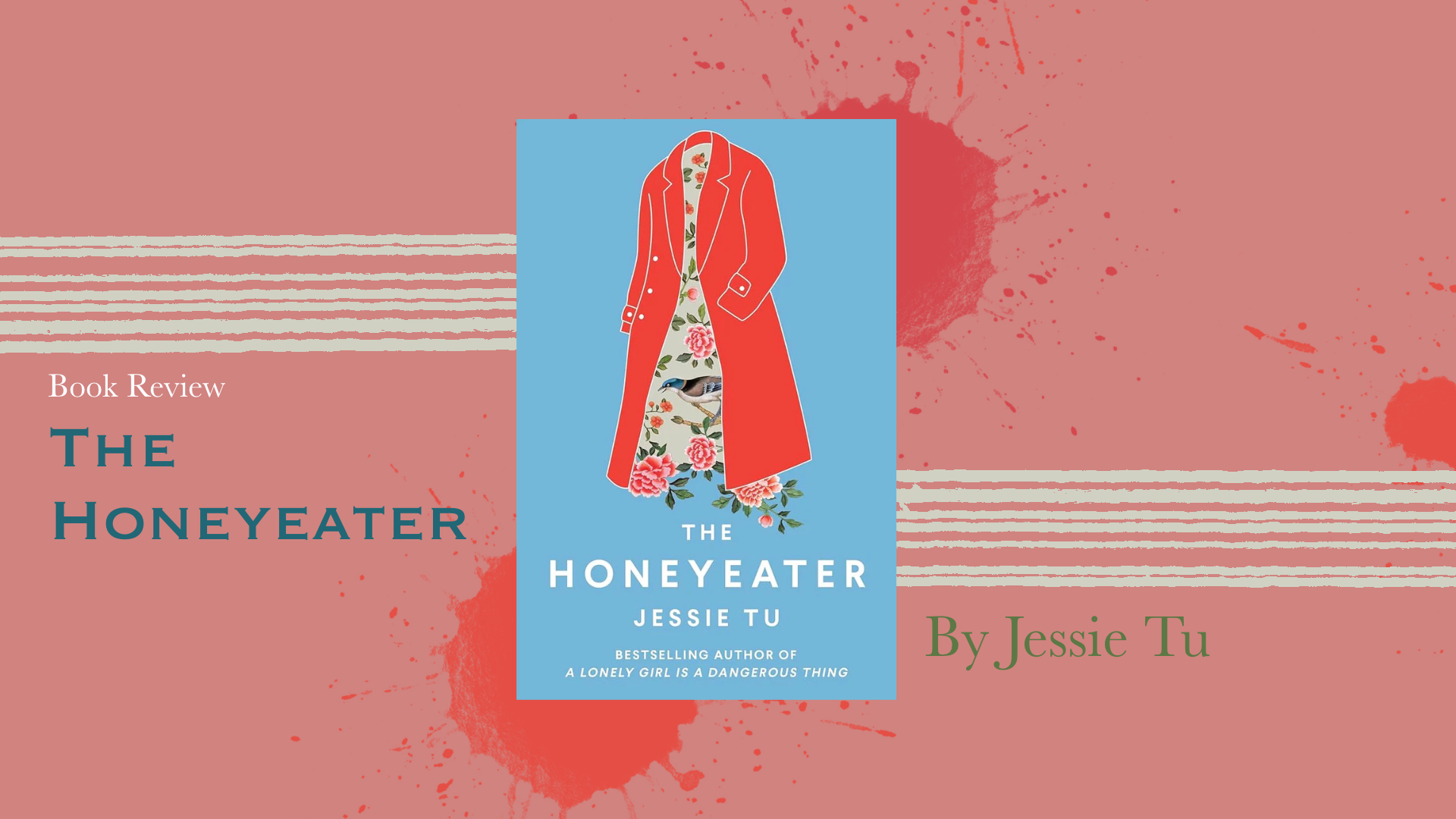
The Honeyeater, Jessie Tu
The Honeyeater, by Jessie Tu, is a fascinating glimpse into the world of translation with a sprinkle of suspense. Tu’s books, beginning with the award-winning novel—A Lonely Girl is a Dangerous Thing—take an intimate look at female desires, but this time the desire is to be seen and heard. The novel opens in beautiful Paris. Fay surprises her mother with a package tour holiday to France, to celebrate her birthday. Nice, right? Except Fay is chronically online and her mother prefers to stay in her hotel room after dark. Of course, they visit all the icons (the Louvre, the Eiffel Tower, Versailles) but Fay is distracted by work emails and the looming deadline for Naan, her translation work. Fay’s anxieties about work and life come through in the narration style. Rather than pages and pages of scenic travel writing, France just feels like a fever dream. Then news breaks that Fay’s lover, her professor’s husband, has been found dead in his office, which puts an abrupt halt to their holiday. Fay and her mother fly back to Sydney, but the drama is only just beginning.
The Honeyeater showed me that language is never truly faithful. Fay is always referring to her lover as her ex or her professor’s husband. Although they are perfectly accurate descriptions in themselves, they got me thinking about why Fay never actually says “Samantha’s husband”. If she did, she would be admitting to betraying Samantha. To me that talks to the power of words.
Que random anecdote, but bear with me here. In Japanese 7-8, I learned about the wonderful world of causative, transitive and intransitive verbs. Grammar had never resonated with me more. It was a pain to get my head around them, but I’ll never forget their usage all thanks to this small example:
[Name] broke the vase. VS. The vase broke.
Just like Fay’s linguistic gymnastics, there isn’t much of a difference between the two until there is. [Name] is the driver in sentence one. She broke the vase and therefore she is accountable. But there is no subject in sentence two. The vase broke. Who broke it? How was it broken? I think that’s why I enjoyed The Honeyeater so much. There is so much wordplay here, it’s almost a mystery novel and you must put on your detective hat and pay close attention to the language.
Jessie Tu is a book critic at The Age and The Sydney Morning Herald, and it shows in her writing. The Honeyeater is a book laid bare, essentially, a book about a book. Having also been on both sides of the figurative table, as a writer and a reviewer, Tu is in a unique position to recognise language, conventions and foundations and pull them apart and piece them back together.
Speaking of paying close attention, Jessie Tu, and by extension Fay, suddenly decide to stop providing translations for the Mandarin words despite the protagonist being a translator. At one point, there is a whole conversation between Fay and the cab driver in Taipei that is not translated. I found myself following along anyway. I think that’s because language is not strictly limited to words but relies on many multi-layered elements, like context, body language, personality and lived experience. These are all things translators must take into consideration every time they go to translate a book. In this lack of translation, Jessie Tu and Fay seemed to be saying to the reader: I’ve given you all the tools you need, now use them. Listen. Pay attention. In this way, Fay acts almost like a mentor, or how a mentor is meant to be. This is an interesting juxtaposition with Professor Eagan-Smith, who is often controlling and prefers Fay to stay in her shadow.
The Honeyeater often compares the migrant experience to that of the translator, in that both are equally invisible, using a quote from a Marguerite Duras novel: ‘A writer is a foreign country.’ I think the takeaway from the novel is that doesn’t always have to be the case. Fay didn’t always have an easy time of translating Naan, but there was a moment that made the entire thing worth it—I won’t spoil what. Fay connects with Naan’s main character, Harriet Chin, through the experience of growing up Asian in Australia and that’s when the foreign stops and the familiar begins. The familiar begins when the reader connects or can identify with even just a small part of an experience or novel. The Honeyeater is all about adding together all our voices to stop that feeling of invisibility for marginalised peoples.
The Honeyeater was first published by Allen & Unwin in 2024 and has an RRP of $32.99. It is available from most online and local retailers.
Ozlem Kazanaksu is pursuing a Master’s in Creative Writing, Publishing, and Editing and is passionate about everything book-related.
Cover image by GSP editor Finn Zucchi, used with permission.
Leave a Reply