
By Rohana Atkinson
In the final essay of The Pulling, Adele Dumont writes that she has ‘begun to un-swell the space between me and everyone else.’ Isolated by years of a body-focused repetitive behaviour that manifests in compulsive hair pulling, Dumont uses the act of writing to bridge this divide. Woven into her lived experience of trichotillomania is the work of other authors who are also giving shape to the complexities of mental ill health in Australia. By tracing the interdependent links between these writers, a burgeoning composition of mental ill health memoir emerges.
Connecting the dots – the interconnectivity of mental ill health and literary canons
Halfway through her collection, Dumont describes the unnerving realisation that the intricate patterns of her hair pulling habits were not hers alone. Forming the architecture of a ‘larger design’, these habits connect Dumont to a constellation of others who share a lived experience with trichotillomania. While there is comfort to be found in the knowledge that there exist strangers who have been overcome by the same compulsions, Dumont also describes a feeling of self-effacement. The narrow clinical descriptions that reduce trichotillomania to a list of causes, symptoms and treatments fail to communicate the depth and breadth of how this condition can infiltrate every aspect of a person’s life. Dumont’s collection of essays is a rebuttal to this effacement, a filling in of the gaps and a thickening of the condition’s parameters so that they are no longer so clearly distinguishable. It is, as Fiona Murphy describes in a review for The Saturday Paper,‘a timely and poetic addition’ to the ‘canon of illness and disability…being written in real time.’ But what can we make of this canon?
In forming her thesis for The World Republic of Letters, literary critic Pascale Casanova draws on the analogy at the heart of Henry James’s short story “The figure in the carpet.” Upon meeting one of his favourite authors, the narrator in James’ story becomes obsessed with discovering the intention or the genius behind his works, metaphorically represented as ‘the figure.’ In Casanova’s interpretation, the figure in question stands in for a single text that becomes discernible only once it emerges ‘from the tangle and apparent disorder of a complex composition.’ For Casanova, the carpet is made complex by the sheer number of interconnected texts that feed off each other in order to exist. An author’s individual genius – if such a thing exists – is only made possible by the web of its predecessors, the other texts that help bring it into existence. By tugging at the threads woven into Dumont’s narrative, a picture forms of the interdependence of Australian mental ill health memoir. The coherent design of Murphy’s canon begins to take shape.
Finding a voice – the importance of contemporary inspirations and the essay format
When Dumont first encounters Fiona Wright’s Small Acts of Disappearance, she writes of being confounded by a bodily ‘shock of recognition.’ Quoting Wright throughout The Pulling, Dumont scatters examples of the parallels between her lived experience of trichotillomania and Wright’s lived experience of anorexia. In her acknowledgements, Dumont also credits Wright’s work as having taught her how to write about non-linear ‘aberrant and unresolved’ experiences. These sentiments are shared by author Sam Twyford-Moore who has expressed that Wright’s writing opened the door for reflections on his lived experience with bipolar in The Rapids: Ways of Looking at Mania. Alongside Wright, Jessica Friedmann’s Things That Helped– an essay collection centred around postpartum depression – was also celebrated as a catalyst for the reinvention of contemporary Australian memoir.
The essay format as a tool for this revival makes sense when considering that an essay embodies a trial or an attempt, a testing of ideas through the process of writing. While it is hoped that ordering thoughts on paper results in a greater understanding of the topic, the essay also makes space for impromptu connections that may complicate rather than resolve a question. This in turn encourages further discussion and input from other players, just as has happened with the above memoirs that have built upon other writers’ work. For Australian authors concerned with an exploration of the self, the essay invites an open experimentation with form and style. As a structural device, the essay allows for tangential deviations that tackle the complexity of mental health conditions from fresh perspectives, often resulting in fascinating insights that might not otherwise have come to light.
In a discussion of hair’s symbolism for example, Dumont turns to Lee Kofman’s Imperfectand her conception of ‘vanity shame’. In Kofman’s formulation, the pressure for women in particular to improve their physical attributes is contradicted by the notion that investing too much in one’s outward appearance can also be considered shameful. This dichotomy enriches Dumont’s understanding of her own ambivalent feelings about the importance of her appearance. Interactions such as these between the personal, the cultural and the historical thrive in the essay format. Zooming in and out, Kofman and Dumont place their personal experience within the context of the political and the sociological powers that shape us all. By seeking to understand their interiors, the landscape of the zeitgeist in which mental ill health manifests is laid bare.
Resisting easy resolutions – why mental ill health memoir defies the narrative arc
Reflections on the genre of chronic illness memoir have shown how contemporary narratives are rejecting the linear arc of autobiography in favour of ‘a more elliptical form.’ Similarly, the best writing about lived experience of mental ill health resists easy resolutions. As novelist and critic James Bradley writes, so much of the jargon of psychology ‘performs the parlour trick of seeming to offer understanding while actually erasing it.’ Australian authors are doing the work that the mental health industry cannot – questioning the validity of recovery and uncovering what lies between diagnosis and ‘cure.’
Dumont and her cohort do not shy away from the uncomfortable and confronting. Unafraid of revealing what’s pleasurable about the compulsions that govern her, Dumont’s writing draws the reader in with its precision and intensity. Just as each individually pulled hair would be examined and evaluated, so too are each of her sentences. The intentionality of her style, with its expertly punctuated lengthy sentences, mimics the focus and repetition that would be present during a hair pulling episode. Immersed in the minutiae of her story, each essay flows into the next making Dumont’s book as compulsively readable as the habit she is describing. It is in the nitty gritty details of these habits that Dumont finds connections to others like her. By mining the inner workings of their own psyches, Australian authors are stitching together the individual forms of their own figures, working together to enrich and diversify the tapestry of Australian memoir.
See also a book review on ‘The Pulling’ by Simone Anders from GSP Book Review blogs.
Rohana is currently completing a Masters of Publishing and Communications at the University of Melbourne. Predictably, she enjoys reading the most when her Dalmatian Douglas is sitting on her lap. That is until he interrupts or makes her legs go numb.
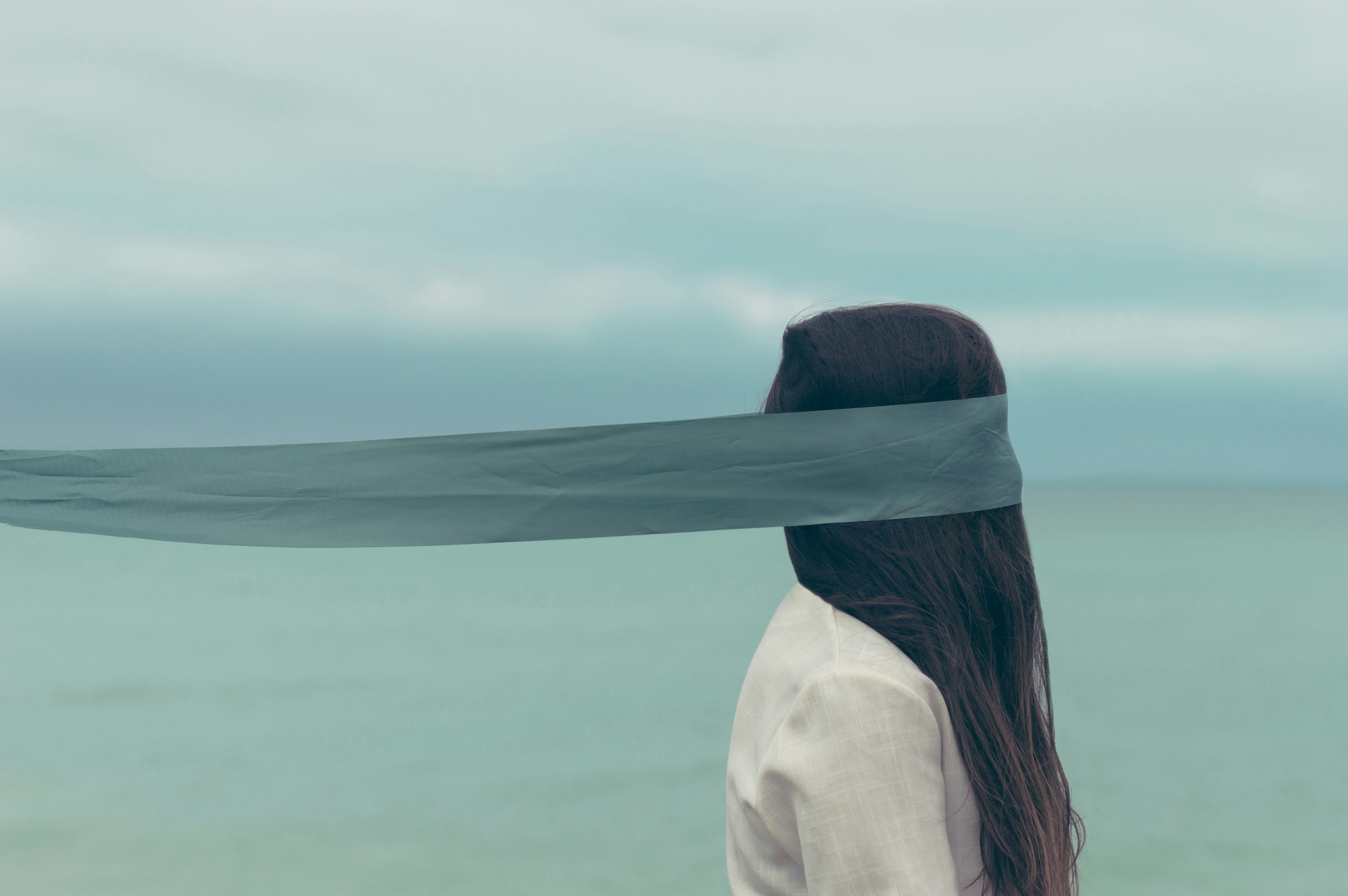
Cover image by Oscar Keys. Used under the Unsplash License.
Leave a Reply