
By Amandi Fernando
If there is one thing that can unite us all in an algorithmic world that threatens to keep us separated, it’s a sweet baby animal.
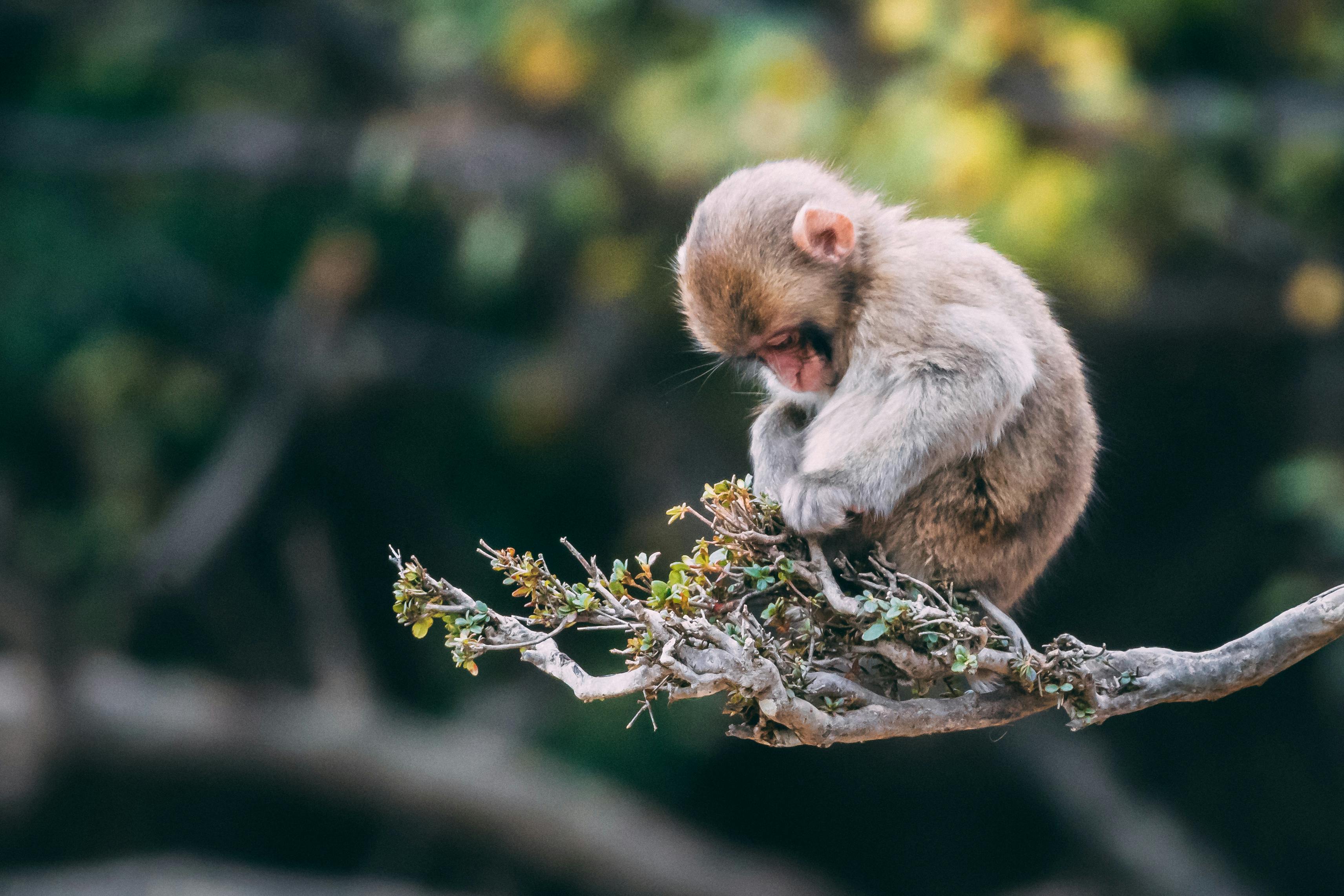
The latest object of our collective sympathy is Punch, a nearly eight-month-old Japanese macaque. At Japan’s Ichikawa City Zoo, the small figure of baby Punch is dwarfed by a $16 DJUNGELSKOG—an orangutan soft toy—from IKEA. Punch drags the toy around the enclosure, cuddling it and running to it for comfort whenever the monkeys he’s been trying to befriend pushes him away.
Punch has been an unexpected uniting force for almost everyone. And that’s not an overstatement.
News organisations like The Guardian and news.com.au, as well as The Conversation and pop culture stalwarts like Saturday Night Live have all hopped on the bandwagon of Punch hype. When you ‘Google’ ‘Punch the monkey’, heart-shaped illustrations of Punch’s face peeking out from behind orange orangutan fur drift down from the top of the screen. Social media teems with calls for ‘Justice for Punch’, with users frequently doing ‘Punch checks’, delighting in his wins and grieving his setbacks as he attempts to integrate into the macaque troop.
It’s not often the world finds a figure that everyone can agree deserves sympathy, empathy and protection from injustice even when it comes to our fellow species. Punch reminds us that it’s possible.
The true tragedy of Punch
Like all heroes that came before him, Punch has a backstory that tugs firmly on your heartstrings.
Punch was rejected by his mother at birth. He was hand-reared by zookeepers and given the stuffed, plush orangutan with the permanent wan smile as a stand-in maternal figure to latch on to for comfort. He is a real-life recreation of attachment theory.
A primatology expert at ANU, Alison Behie, attributes Punch’s abandonment to maternal inexperience. Zookeepers also believe that Punch’s birth during a heatwave and the additional environmental stress this added caused his mother to prioritise her own health and future reproduction over caring for her new baby.
Perhaps it’s this feeling of abandonment that we can all relate to in some way that has us jumping to the cause. We feel like we know how Punch feels and that we can not only share in his grief but help him through it.
The commodification of animal characters
An unproblematic hero is one we will always get behind: an underdog without geopolitical leanings; a modern-day Oliver Twist who is unlikely to milkshake duck us with the reveal of a fatal flaw. In other words, the ideal brand ambassador and it was only a matter of time before big-name brands pounced on the cash cow.
IKEA didn’t have to try hard to reap the rewards that Punch sowed. The soft toy orangutan is sold out at IKEAs around the world with eBay resale prices reaching above $150. The IKEA website has a pop-up addition telling customers that ‘Punch the monkey’s friend is very popular right now’ and encouraging sign-ups to be notified when more stock arrives.
The internet abounds with AI-generated images of Punch and his orangutan enjoying a great meal-deal at local restaurants. Enthusiastic think pieces on what brands can learn from Punch’s bond with his orangutan appear on our search engines. Capitalism has learned the value of an emotional purchase and isn’t holding its punches. While anthropomorphizing animals in this way feels fun and maybe harmless (what would Punch care what we think of him?), doing so says a lot more about us than it does the animals we humanise. What is it about Punch that has put us into a collective spin?
An outlet for our feelings
We can look to Punch as a symbol of motivation, hope and steadfast morality in increasingly unstable times. With seemingly perfect heroes eventually revealing some insufficiency that tarnishes them, it is unlikely that a non-verbal and utterly adorable monkey will disappoint in the same way.
Punch remains unscathed for now. Instead of a respite for our feelings, he has become an antidote for the times we live in. He displays perseverance in the face of adversity and innocence in the face of rejection. He’s an abandoned childlike figure that we can believe will thrive—a potential triumph that we can watch unfold in the man-made confines he is held in. He is our one perfect thing, if nothing else is right in the world.
But when the brands cash out and little Punch grows, the future we’re all rooting for him to have will be the same as all the other macaques held in captivity. Punch will fade into obscurity, his innocence no longer appealing to the public, and another hero will climb atop the pedestal.
Can the little monkey defy the odds and shoulder our hopes and dreams to complete his hero’s arc? The punchline may be that Punch was just our hero of the week and the internet’s attention span isn’t long enough for us to stick around.
Has there been justice for Punch?
Since this post was first drafted in March 2026, interest in Punch has waned significantly. Now when you ‘Google’ Punch the monkey, the search engine doesn’t celebrate him. The last popular social media posts about him are at least a month old.
Punch seeming to have a girlfriend was the last piece of news that ignited the online world. But the head of Ichikawa’s zoo and botanical gardens says he’s unsure about that; it’s much more accurate to say Punch has just been accepted as family by other monkeys. It seems like no one really thinks about Punch now that he’s acclimated, maybe because he’s no longer deserving of our pity.
Japanese news outlet, The Mainichi, reported in April that a new baby monkey has joined the troop, making Punch now the second youngest of the 56 macaques at the zoo. Like most internet stars, Punch burned bright and not for very long. But while internet stardom did nothing to change Punch’s circumstances, his own resilience seems to have given him a happy ending after all.
Amandi Fernando is a Sri Lankan writer and current postgraduate student at the University of Melbourne in the Master of Creative Writing, Publishing and Editing program.
Leave a Reply