
By Mathilde Tobin
In many ways Lyra was a barbarian. What she liked best was clambering over the College roofs with Roger, the Kitchen boy who was her particular friend, to spit plum stones on the heads of passing Scholars or to hoot like owls outside a window where a tutorial was going on, or racing through the narrow streets, or stealing apples from the market, or waging war.
– Philip Pullman, Northern Lights
As a child I was always drawn to stories with young female protagonists, not just girls who were cool and badass but girls who were real. Girls who cried, laughed, fought, tried, failed or succeeded. To this day, a lot of my favourite characters are the young female protagonists in books I read or films I watched when I was young. However, now I realise that many of the characters I built my girlhood around were in fact written by men. Does this make them bad female characters? Inauthentic and untrue to my experience and the experience of other girls and women? Not necessarily. Yes, it’s important to champion stories about women written by women, but I don’t believe it takes away from the importance or authenticity of the stories and characters, even if they were written by men.
How Philip Pullman got it right, and wrong, about His dark materials’ Lyra Silvertongue

A Tumblr post from user @fulltimecatwitch expressing praise for Philip Pullman’s writing.
Lyra Silvertongue, the protagonist of Philip Pullman’s epic fantasy series His Dark Materials, is a feral young girl. In Northern Lights she’s described as a ‘barbarian’ and a ‘half-wild cat’. How freeing it was to see a young girl described in such a way! She isn’t described as a tomboy or bossy, words which feel shallow and subtly negative. On the contrary, barbarian and wild cat are terms of admiration and endearment, and they felt much truer to myself and other girls I knew. Not just a mere description, but a force of nature! The excitement of reading about a young girl, like Lyra, leading such a fantastical adventure was something I’d never experienced before. Lyra is allowed to be snobby and rude, as well as incredibly brave and compassionate. She is fierce, cruel, loyal and scared. She is a young girl, but first and foremost she is a human child. Her reactions feel real, her emotions valid. Never once reading that series did I feel that Pullman doesn’t understand what is at the core of his character: humanity.
Lyra’s a bit of a scoundrel in some ways—she’s a shameless liar, she’s a barbarian, she’s a bit of a savage—and those things are not necessarily admirable. But she’s real. She’s based on no one in particular but I did teach a lot of little girls who were like Lyra. In every classroom in the country there are girls like Lyra.
–Philip Pullman in The Guardian
Currently, Pullman is writing a second series of books set in the same world as His Dark Materials. Nineteen years after the publication of the first series’ final instalment, he published The Secret Commonwealth, a book that explores Lyra’s life as a twenty-year-old woman. Now a semi-depressed undergraduate with her mind on nihilistic philosophies that go against all she learnt and experienced as a child, Lyra is far from the fiery girl she once was. Though, of course, that fiery Lyra is still in there, and the wonder in The Secret Commonwealth is going on a journey with Lyra to rediscover her childhood self. She begins to regain her curiosity, her wildness, her sense of self; it’s very much a human story about the discovery of oneself and finding joy in your inner child. As someone who read about Lyra as a child, and now do again as a young adult—both times being a similar age to Lyra—I always feel close and connected to her, as if she is a childhood friend I have reconnected with in recent years.
However, The Secret Commonwealth received negative criticism about how Lyra’s older male counterpart was written in relation to her. Malcolm, 31 years old to Lyra’s 20, and someone who knew Lyra as a baby and briefly again as a teenager, has what would be best described as a romantic infatuation with Lyra. It’s often uncomfortable to read, and left a bad taste in the mouths of readers who had grown up with Lyra and admired her as—for want of a better phrase—a strong female character. Must a woman be desired? Can she not just be? Of course, there’s nothing wrong with being desired, but here it feels distinctly like a writing decision made by a man. It’s not a journey that any female readers would have chosen for Lyra, nor does it feel like something a female author would have chosen for her.
It has now been six years since The Secret Commonwealth was published, and the final book in the series, The Rose Field, was due to come out on 23 October, 2025. This gives Pullman a chance to either right the wrongs he made, or to analyse them and approach them with the gentleness and critque they deserve. How Pullman resloves these issues surrounding Lyra and Malcolm’s relationship will determine both his own legacy, but also Lyra’s. It’s rare to grow up alongside a fictional character through both your childhood and adulthood, making Lyra’s legacy all the more important for the women who grew up with her.
What Pullman could learn from Hayao Miyazaki

A Tumblr post by user @warmgreytail expressing gratitude for Hayao Miyazaki’s rendering of female main characters.
In almost every single Hayao Miyazaki-directed film, girls take centre stage as the protagonists of fantastical and whimsical coming-of-age stories. They range from characters such as four-year-old Mei to young adult wolf princess San. Each girl is her own person with her unique goals, traits and flaws. They grapple with a range of situations, like the destruction of one’s home, a sick mother, self-discovery and growing up. Each journey is unique to each character, and in turn each character is allowed to grow and explore herself and the world in different ways.
Miyazaki’s female characters are also allowed to simply exist without the need to be desired. The director himself even stated that he is skeptical of the rule that where a male and female character coexist, they have to be romantically involved. Instead, Miyazaki sees an opportunity to have both characters mutually inspire the other to live, which he feels is a closer portrayal of true love.

A review on Letterboxd from user @Tay of Spirited away.
Mei and Satsuki in My Neighbour Totoro must come to the realisation that they may lose their sick mother, while also still enjoying the magical aspects of their childhood. Chihiro of Spirited Away is flung into a bizarre world where she must grow through her ten-year-old angst in order to stand on her own two feet and rescue her parents. Wolf-raised girl San of Princess Mononoke must fight other humans in order to protect and save her forest from their destruction. None of these stories are exclusive to the characters being girls or women; they are all just human stories about growing up and belonging. Miyazaki sees his characters as intrinsically human before he sees them as girls, and in doing so he is able to create fleshed-out characters that can speak to all people, no matter what age, gender or ethnicity—they are simply for everyone.

A review on Letterboxd from user @DirkH of My neighbour Totoro.
Girls and women are just people—so write them like they are
In the writing of His Dark Materials and the character Lyra, never did her ‘girlness’ seem to be in the way of her character, the story, or Pullman’s writing. But in The Secret Commonwealth, there are certainly moments where Lyra’s womanness is known and present, often clumsily so. Is it only possible for men to write well-rounded female characters if they are children, and therefore innocent and non-sexual beings? Can this understanding of humanness not also be extended into adulthood?
A friend of mine once went to a reading of one of our favourite authors, a Swedish man by the name of Fredrik Backman. Backman has penned many novels, most notably A Man Called Ove and Beartown, the latter of which explores the lives of people in a small town, many of whom are women and given the same time and agency as the book’s male characters. Somebody at the reading asked Backman: ‘How do you write female characters so well?’ My friend said Backman seemed amused by the question. ‘I just write them as people,’ he answered. I can only hope that for Pullman’s final instalment in Lyra’s epic journey he has taken a page out of Backman’s book.
Mathilde Tobin is a Melbourne-based writer and graduate of the Screenwriting program at Victorian College of the Arts. She has worked at Story Studios Australia for three years and recently completed a Masters of Creative Writing, Publishing, and Editing at the University of Melbourne. In 2024 Mathilde was nominated for the Lord Mayor’s Prize in the Narrative Non-Fiction category for the piece The Horror Tropes Of Neighbourhood Friendships. In 2025 she had her horror short story, Waking the Rabbits, published in Story Studios Australia first volume of Studio Shorts, as well as a coming-of-age short story Jackie published in Grattan Street Press’ Stranger Weather. Mathilde likes to write coming-of-age stories exploring the intricacies of girlhood. Her longtime obsessions include Philip Pullman’s His Dark Materials and the Studio Ghibli films, both of which are huge inspirations in her own storytelling.
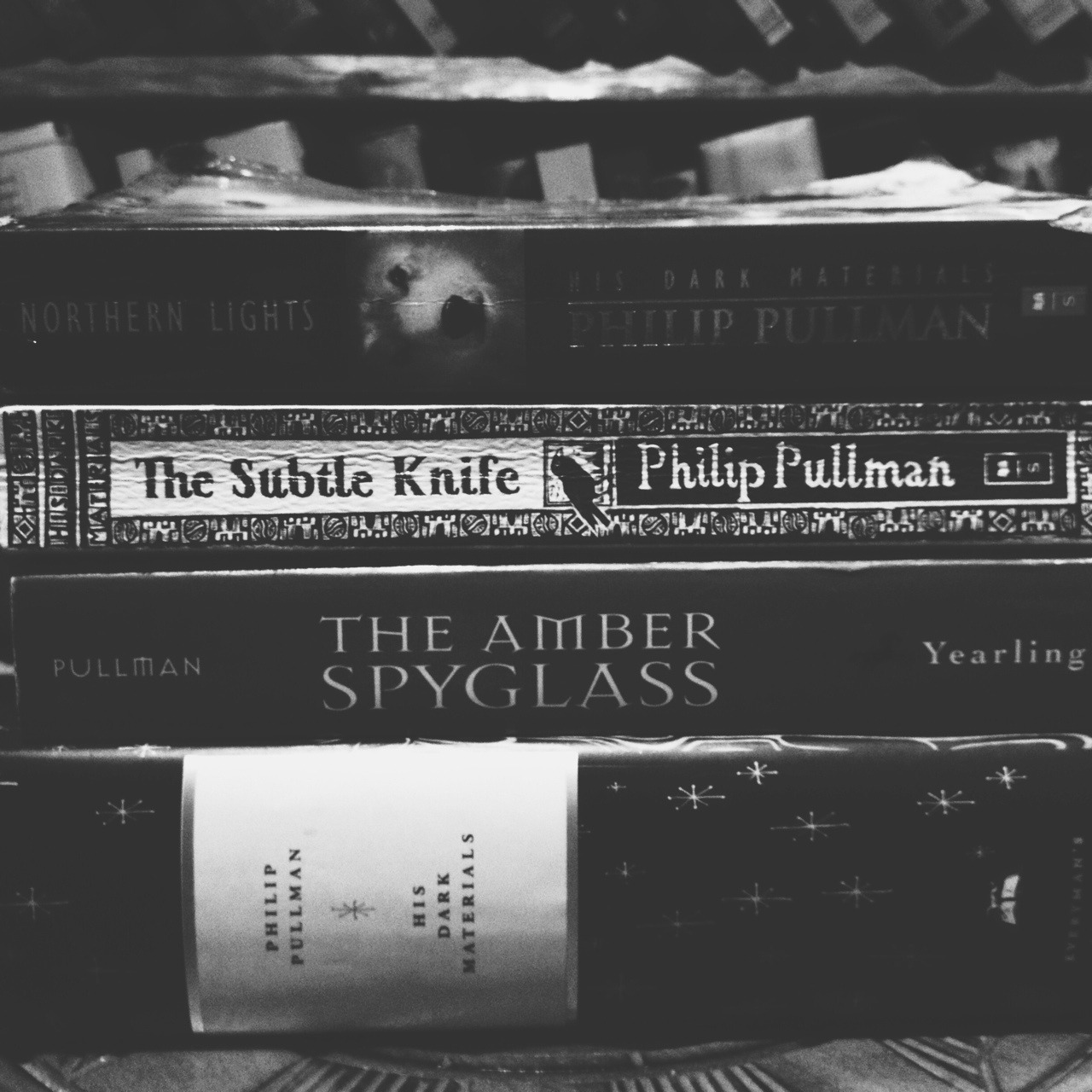
Feature image by Mathilde Tobin.
Leave a Reply