
By Arshia Anand
TikTok has become the de facto trend lab of viral content—not just because its algorithm pushes niche trends to the masses, but because hyper-engaged gen z, who constitute 60% of the platform’s users, treat it as an unmonitored playground. Where Instagram demands polish, TikTok runs on raw spontaneity, making it indispensable for indie artists—even as its future in the US hangs in limbo amid repeated delays to the ban. But concealed behind the virality of TikTok’s content is an important, yet frequently overlooked, component of its growth: indie music.
Indie music was the soundtrack to our adolescence
Growing up, most of my peers listened to the songs topping Billboard charts and radio rotations. But for me and many other zillennials, it was indie artists like Mitski and her contemporaries who were the soundtrack to high school. It was their nonconformist approach to instrumentation—broadly defined by alternative soundscapes and bedroom-pop intimacy—that we enjoyed the most.
This is why the term ‘indie’ doesn’t necessarily just refer to artists from independent labels, but also to artists whose music stands apart from mainstream pop, and whose creative and aesthetic choices remain free from major-label influence.
When indie music met new media
The appeal of indie music depends, largely, on its capacity to mesh genres and break musical stereotypes, forming a stimulating, diversified cross-section of the current music scene. And, despite the misconception that indie music is depressing—slowly paced and tonally mellow—many indie songs are catchy, upbeat and danceable. It’s a fitting choice to accompany TikTok dances and challenges. But, where’s the credit?
Viral TikTok songs are a double-edged sword
Viral today, forgotten tomorrow
Viral TikToks can blow up a song overnight, but the attention often centres on the trend a song accompanies rather than its artist. Users latch onto a meme-able beat or a relatable lyric—and while a clip racks up millions of views, the musician behind the accompanying song is easily lost in the mix. Once one leaves TikTok, indie tracks are often buried amongst more mainstream music. For indie artists, this means massive numbers of streams don’t always translate into lasting fans or deeper engagement with their body of work. According to a study on gen z’s taste in music, only 58% of users who heard songs on TikTok then went on to listen to more than the viral snippet.
The Marías first gained recognition through a TikTok trend that stood in stark contrast to the band’s signature dulcet tones. Since then, the band has received further attention on TikTok—songs like ‘No one noticed’ have been used in trends highlighting couples’ relationship milestones. Yet despite racking up 670 million Spotify streams and 1.32 billion TikTok views, the band’s Spotify fan retention rate (which shows what proportion of an artist’s monthly listeners also follow them on Spotify) remains just 10.3%, indicating that only a small fraction of those who listen to their music actively follow them for new releases.
Another example is Beach Bunny’s ‘Cloud 9’, a giddy love song evoking the intoxicating rush of a new romance. The track became one of TikTok’s early viral hits, prompting the band to release alternative versions with gender-neutral pronouns to deliver a more inclusive message. The song has been played over one billion times on TikTok. Even so, Beach Bunny’s Spotify fan retention rate remains at just 25.49%—a sign that many listeners are focusing on individual trending tracks rather than exploring the artist’s discography.
Indie songs on TikTok function only as empty vessels for viral trends; short-term fame doesn’t build the artist’s following long term—it limits their recognition to the associated trend. This experience isn’t shared by mainstream music, which already enjoys radio plays and wide audience reach beyond any impact of internet virality.
Fans, Fame, and Boundaries
While TikTok can offer artists massive exposure, and even career revival, it also raises concerns around consent and fan entitlement—making it a complicated space for musicians navigating both popularity and autonomy over their work.
One artist who encapsulates this dynamic is Lana Del Rey, who, despite being part of the music industry for over a decade, is only just getting her due in recent years. Del Rey was presented with the 2023 Billboard Women in Music Visionary Award, and her re-emergence can be ascribed to the majority of her discography circulating in the TikTok sphere.
In particular, her unreleased track ‘Queen of disaster’ found popularity on the app. While the song’s virality drew new attention to Del Rey’s work, it was used despite the fact that it was not an officially released track—and in direct opposition to Del Rey’s past pleas for fans to refrain from sharing unreleased material until she releases it herself. Del Rey’s experience, and her coveted trove of unreleased songs that continue to circulate online, demonstrate how TikTok fame can magnify an artist’s reach but simultaneously diminish their authority over their own music.
TikTok separates art from indie artist
Using indie music on TikTok often detaches it from its artist, who then doesn’t benefit from the virality of their material; sounds on TikTok are often attributed to the user who first posted them, instead of the original artist. TikTok users also manipulate songs, further distancing them from the original artist and genre. These alterations typically involve transposing the song—changing its pitch to a different key—and turning it into what’s called a ‘slowed + reverb’ version, creating a cinematic audio that thrives on TikTok’s algorithm.
The rise of AI-generated content has also introduced a new challenge for indie artists; increasingly, popular indie songs on TikTok are replicated using AI to mimic the voices of other artists, sometimes leading to confusion about a song’s original source. For instance, an AI-generated cover of Chappell Roan’s ‘Good luck, babe!’in Billie Eilish’s voice showed how easily the platform can facilitate the appropriation of an artist’s work and reduce it to novelty.
Chappell Roan’s ‘Good luck, babe!’ reimagined by AI in Billie Eilish’s voice. By TikTok user @zuklz.
TikTok dance trends make indie artists feel like one-hit wonders
Indie songs often surge in popularity on TikTok after a long period of dormancy, catching their dedicated listeners off guard. It can be surprising to see a beloved, lesser-known track suddenly trending, seemingly embraced by the mainstream yet with little recognition of the original artist. For many dedicated fans, the virality of their favourite artist feels less like a celebration and more like a passing trend—one that piques interest without cultivating lasting appreciation.
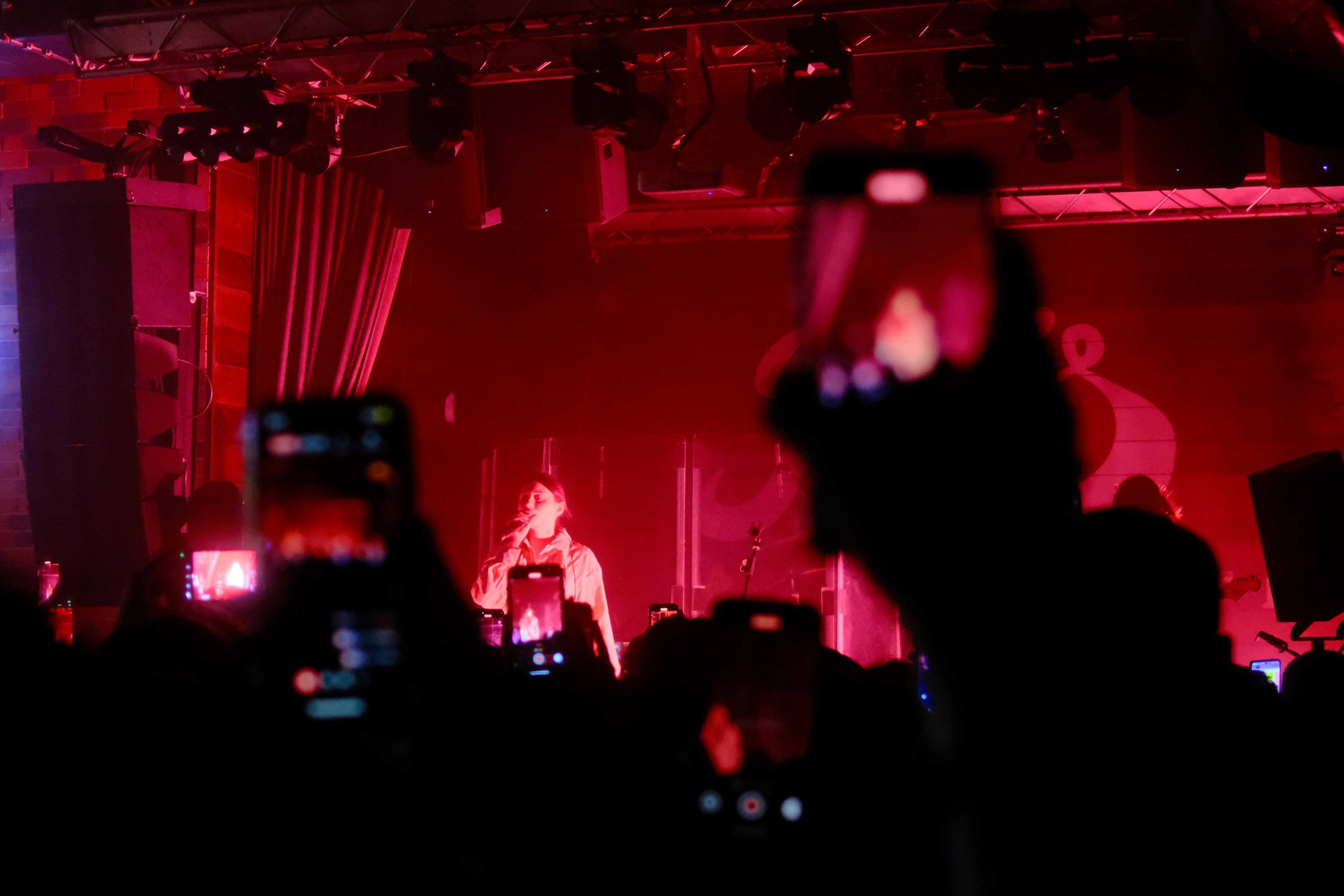
Indie fans worldwide have noticed an increase in people attending the concerts of indie artists just to hear one viral TikTok track. Lizzy McAlpine echoed this in an interview with The New Yorker, describing virality as ‘something of a curse’ after witnessing audience members leave immediately after she performed her TikTok hit ‘Ceilings’, skipping the rest of her deeply personal set, which included a song dedicated to her late father.
Indie artist Steve Lacy quizzed audience members on the lyrics to his viral TikTok song ‘Bad habit’.
Artist Steve Lacy, whose song ‘Bad habit’ blew up on TikTok, noticed his concert crowd was largely silent except for during that hit. Frustrated, he started quizzing the audience on his lyrics to encourage engagement, only to be unfairly labelled uptight, despite simply asking for the respect any artist deserves. The fans who attend concerts to listen to a single viral TikTok song take up space and tickets to the exclusion of genuine fans, understandably leading to frustration among artists when an audience only knows a viral verse or chorus.
Indie artists deserve meaningful recognition
While TikTok has remodelled the music industry by rendering indie tracks indispensable sources of viral content, it’s vital to acknowledge the unintended consequence: limiting indie artists’ recognition to the confines of those viral moments. Despite a rise in the appreciation of indie music, it remains a relatively hidden subsection of the music industry more generally.
Indie musicians deserve recognition and respect for their artistic innovation and cultural impact (as seen online). To truly honour their work outside of fleeting virality, fans and platforms alike must engage more deeply—whether that means listening to full albums, attending concerts with genuine interest or simply being mindful to credit and explore the artists behind the snippets they enjoy. In doing so, we give music the weight it deserves, acknowledging the people and ideas behind the songs beyond the brief flash of online attention.
Arshia Anand is a Melbourne-based multimedia journalist and content writer at Urban List, with a Master of Journalism from the University of Melbourne. She specialises in media and internet cultures, with a focus on amplifying LGBTQ+ and POC stories. Outside of work, she can often be found tackling her Letterboxd watchlist.
Cover Image: Photo by kinase kinase on Unsplash
Leave a Reply