
Ashley Worthington
If you’ve been on TikTok for any amount of time now, you’ve probably seen a video that opens with someone ripping the cover off a book. Once you recovered from your initial shock, you might have continued watching to see that this person is, in fact, creating a completely new book. You’ll see that by measuring twice, cutting once and slathering everything in glue, they turn an old, pre-loved book into something new. What we are seeing amid this destruction, is the rebirth of an often forgotten craft: the art of bookbinding.

‘The Song of Achilles’ by Madeline Miller Rebound Artists’ Book, 2024. Image and artwork by Ashley Worthington. Used with permission.
Bookbinding Historic Origins
Crafting a customised hardcover is in no way a new concept. Beginning as early as the 5th century CE, those fortunate enough to own books would take their text block (pages that made up the book) to a bookbinder, who would then craft a cover. These were originally made from wood and leather, which served to protect the book’s fragile pages. Literacy wasn’t widespread, so those who could read would have been part of elite society, such as clergy, scholars or scribes, meaning bookbinders were considered important artisans to the ‘higher-ups’ of the time. While this is a very Eurocentric overview of bookbinding’s history, there were many other techniques developing throughout the world, such as the concertina in China.
Studying the artform
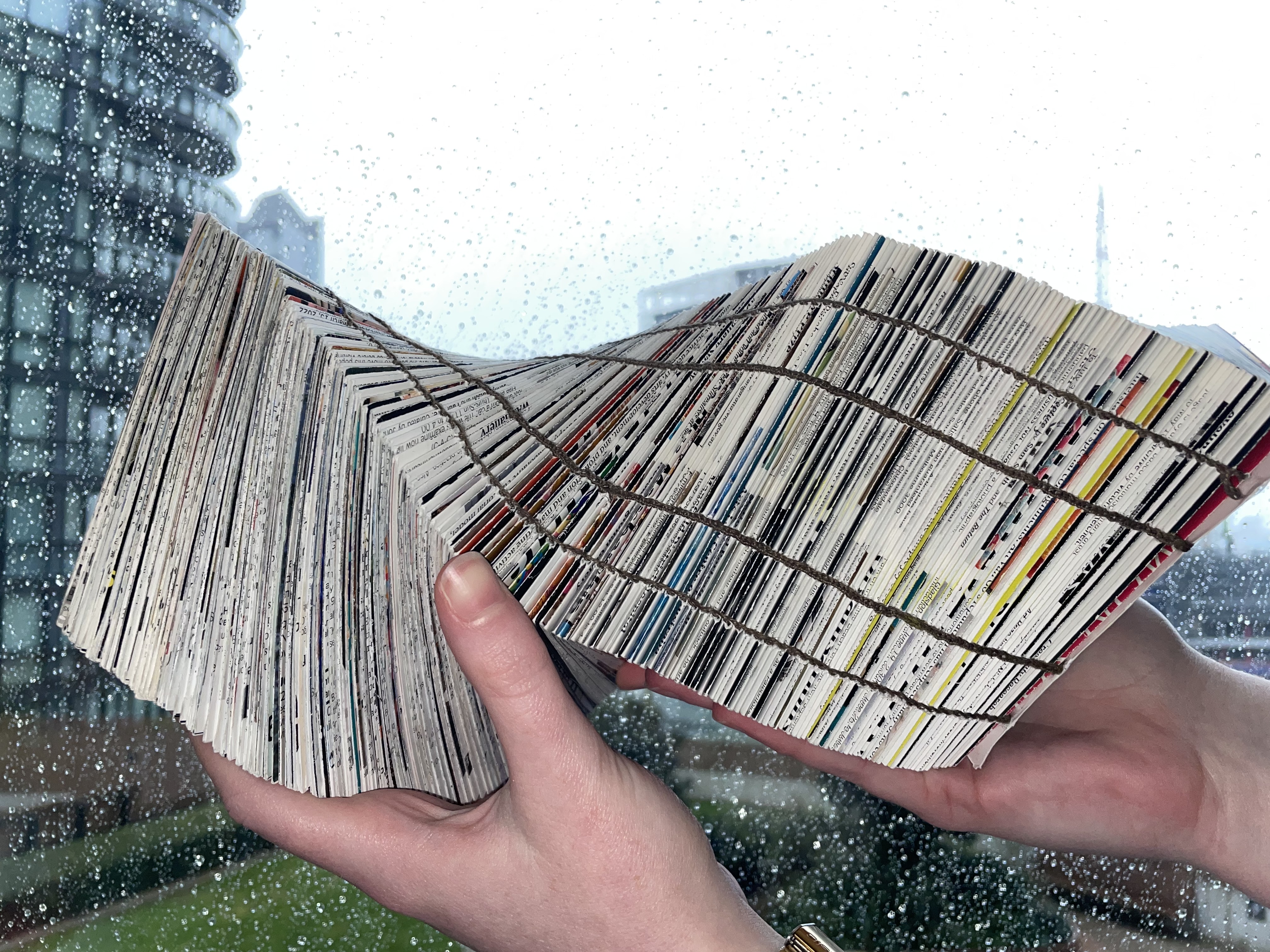
I am a practicing bookbinder, so ripping up books to create new ones isn’t anything I haven’t already done myself (Image 1 is my contribution to this trend). I’m approaching this topic having been taught bookbinding in a traditional fashion, by experienced bookbinders. Below, is an image of an artists’ book I made in my first ever bookbinding class. Before anyone speculates, no, it is not meant to be read; it’s an artwork designed to show off folding and stitching techniques. I’m showing you this as an example of something I don’t believe I would have been able to learn outside of a classroom. I had to be shown this stitch (Coptic for those wondering) very slowly four times before I could confidently do it myself. So, while TikTok is a fantastic tool for sharing techniques and ideas, I wouldn’t say it entirely replaces learning directly from craftspeople.
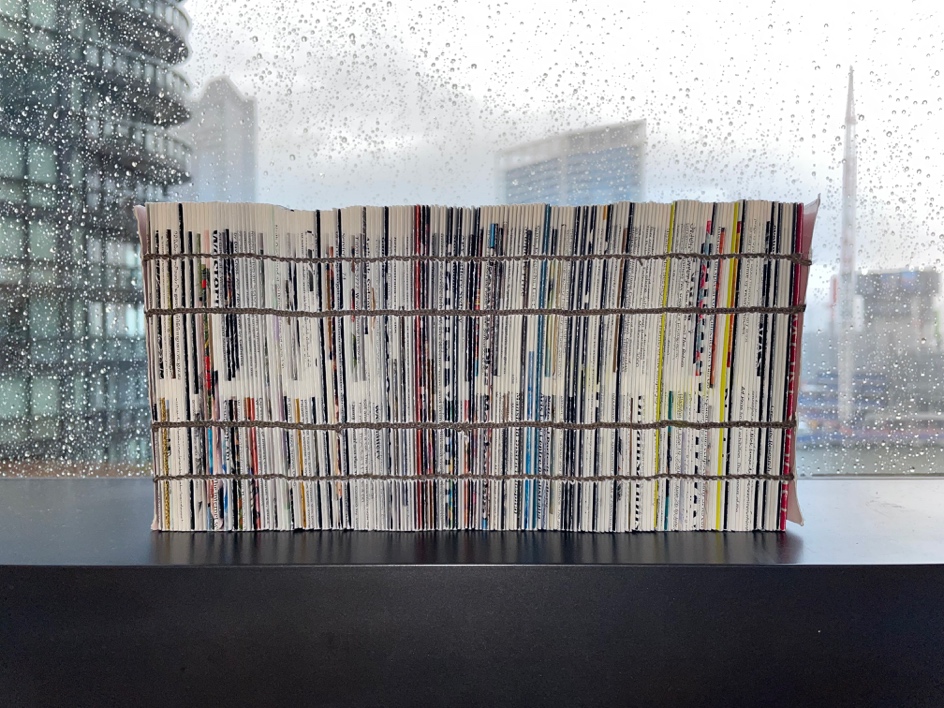
‘An Art Almanac Almanac’ Artists’ Book, 2022. Artwork and image from Ashley Worthington. Used with permission.
The TikTok path to bookbinding creativity
Though I deeply value learning traditional bookbinding, it’s not an affordable craft. There are many niche tools – bone folders, awls, book presses – that bookbinders swear are necessary. A few of them are, but something that BookTok taught me that art school didn’t was how to improvise. No book press? Use wood and clamps. No book cloth? Here’s a cheap iron-on adhesive that lets you use any fabric. Where else but TikTok would you see an ‘omnibind’, where artists take multiple books, usually a complete series, and combine them into one giant book. BookTok allows people to share and explore new ideas in a way being taught by select artisans can’t. I don’t think I’d be nearly as confident a bookbinder had I not been taught in a class, but I don’t think I’d be as creative a bookbinder without TikTok.
Binding beyond the ‘book’
The current landscape of Bookbinding-TikTok is flooded with variations of the codex, so maybe it’s time to shake it up a bit. Something yet to take off to the same extent as the ripping-covers-off-books trend is the artist’s book. The primary function of an artist’s book is as an artwork rather than something to be read. My favourite examples of these works are concertina variations. This technique, also called an accordion book, was invented in China during the Tang Dynasty, as an alternative to scrolls. I’m a little biased here, as I work primarily with concertinas, but I think the next phase of bookbinding on TikTok should move beyond the codex.
This is an opportunity for up-and-coming bookbinders to explore techniques beyond the Eurocentric notion of a ‘book’. Artist Jazmina Cininas, has been working in the concertina style for years now, and is a prime example of a bookbinder expanding the limits of the medium, something bookbinders on TikTok could glean inspiration from. These different styles of binding may not be quite as dramatic as ripping covers, but they tend to be easier and more budget-friendly – relying on folding and glueing rather than stitching – and the result is often stunning. One of my books, Chandeliers and Billy Tea, received an ego-boosting collective gasp when presented at a show recently. I feel there is potential for concertinas to go viral, introducing the world to another technique.
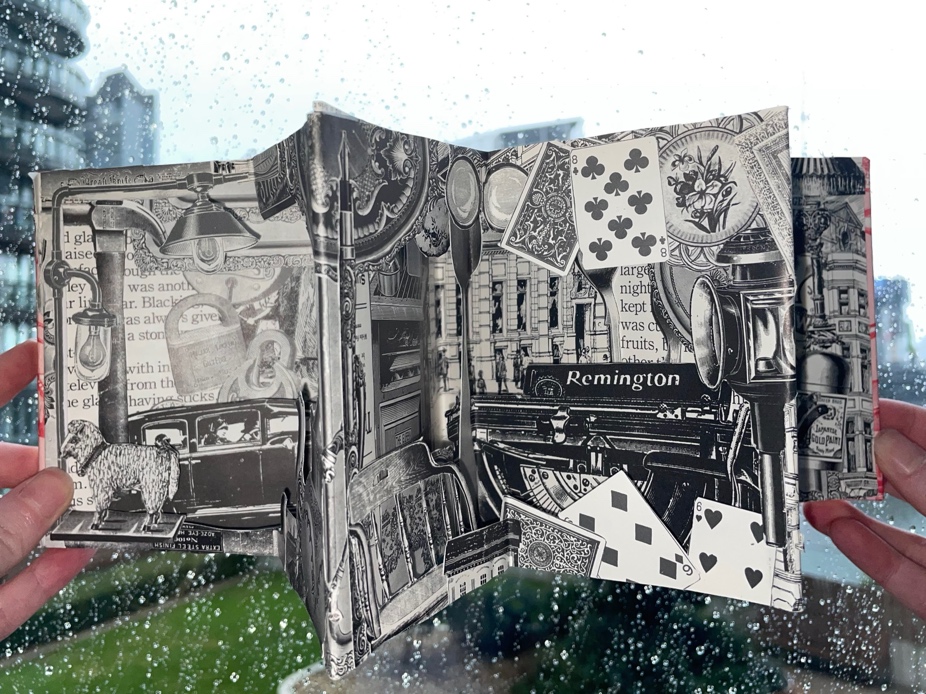
‘Chandeliers and Billy Tea’ Concertina Artists’ Book, 2025. Image and artwork by Ashley Worthington. Used with permission
Preservation of an ancient craft
Knowing bookbinding has such a rich history, we can see why its trending on TikTok is so important. With all the new bookbinders being birthed online, we’re seeing a new appreciation for historical techniques, alongside the development of new ones. Online trends create cultural phenomena, and this is no different. As of early 2025, the bookbinding hashtag had 110 million posts, and well over a billion views. TikTok is allowing a centuries-old tradition to gain traction in a way that means it’s not going to disappear anytime soon.
If I can encourage you to do anything, it’s to pick up a pair of scissors, some paper, a bit of glue and get to ripping up books. After all, there are many TikToks to inspire you.
Ash is an avid book collector (and reader), a sucker for good cover design, a grammar nerd, and an Oxford comma apologist. She loves to read about women’s rights and wrongs, and believes a good book is best enjoyed in bed or on a long tram journey.
Cover image: An Art Almanac Almanac’ Artists’ Book, 2022. Artwork and image from Ashley Worthington. Used with permission.
Leave a Reply