
By Keely McPherson
As a self-proclaimed slow reader, I didn’t enjoy reading challenges as a kid very much.
And yet, year after year, I would somehow find myself roped into yet another reading challenge, only to be left behind within the first couple of weeks. My friends would all have a laugh and tell me to hurry up. I would laugh too, but I wouldn’t hurry up. More often than not, I’d allow them to race ahead, still reading all the while but thoroughly left out of the conversation. I’d wonder, how are they reading so fast? Do they just absorb things faster than I do? I didn’t ask. I didn’t mind. I was having my own fun. Because I’d learned that, for me, when reading becomes an item on a to-do list, the magic dies.
It seems I’m still the same person in the year 2025, only taller and much less grown-up. I read, but I’m still slow. BookTok didn’t exist when I was a kid, but the content on which TikTok’s book community thrives leaves me with the same feeling as that kid who couldn’t seem to find the appeal in speeding through books for the sake of adding another mark to her tally. From book hauls to home library tours, the scales of BookTok’s most popular content have tipped in favour of quantity, promoting the excessive consumption of books and leaving untrendy content creators with two choices: either Trojan Horse your way onto people’s screens by appealing to the algorithm, or simply accept and appreciate your dedicated audience of three.
The aesthetic reader
The growing concern surrounding the overconsumption of books seems to stem from the rise of a handful of recent BookTok trends. Content such as home library tours, ‘all the books I bought vs all the books I read’ and the immensely popular book hauls, often featuring 50 books or more, remind me of the cosmetic and fashion hauls which were unavoidable on YouTube in the mid-2010s. Unsurprisingly, the trend of BookTok hauls can be traced back to their rise within the BookTube community, where book hauls still remain one of the most popular video genres for these creators. In large part, their success lies in the fact that this video format is easily digestible, simple to create and highly repeatable, making them a dependable content strategy for creators. While these videos attract viewers, they also feed into the idea that owning more books equates to being a ‘reader’.
However, as with every trend, it’s almost inevitable that the pendulum will swing in the opposite direction. The 2020s have seen this occur within the beauty and fashion industry with movements such as ‘Project Pan’. In addition, the romanticisation of thrifting and the minimalistic ‘clean girl aesthetic’ speaks to an increasing awareness of overconsumption within these social media communities.
These efforts to encourage mindful consumption highlight a rising concern among consumers over where our products come from and where they go once we’re done with them. In order to reduce the more than 160,000 truck loads and 10 million trees worth of unread books that are wasted each year, we must also begin to recognise the difference between purposeful, meaningful collecting and performative consumption.
This then begs the question, does a similar future lie before BookTok?
Taste over trend
Much like the cosmetic and fashion industry, digital communities are the lifeblood of publishing. Whilst critical reception, quality writing and the work of publishing houses will always be crucial to the success of a novel, social currency is a highly sought after asset within the publishing world. Therefore, it should come as no surprise that TikTok, being the monster marketplace that it is, is fervently utilised by publishers to encourage spending. More than ever, readers are purchasing books amid the flurry of hype generated by marketers, publicists and influencers in an effort to feel connected to their online community.
Special edition book sets, exclusive covers and signed copies are just a few of the ways publishers draw readers in, often partnering with BookTok influencers to promote them. However, many influencers don’t properly disclose ads, and with TikTok designed to show consumers what they want to see, readers have been feeling the pressure to keep up with trending titles for fear of being left out of the conversation. This robs readers of both the time to read everything they buy and the space to develop their own taste.
Instead, wealthy influencers have fostered a subculture where possessing a curated personal library is now a prerequisite to being viewed as an authentic ‘reader’ within the BookTok community. On BookTok, books are viewed as a soft luxury—a wealth signifier. Owning beautiful books appears to be the trending factor, as opposed to reading them. Videos featuring backgrounds of fully-stocked home libraries with a creator unboxing yet another haul of 40 books will do well on BookTok. This not only promotes excessive consumption, but also creates an economic barrier to meeting the criteria of what makes a true ‘reader’ online. Whilst not preventing content creators from participating in online reading communities, this economic barrier does significantly limit their likelihood of reaching a wider audience.
As a result, the volume of discourse surrounding the overconsumption of books and the excessiveness of book collectorship has been growing. 2025 has brought about the rise of ‘underconsumption core’, a hashtag under which creators aren’t only attempting to limit the amount of products they consume, but also to reach out to their audiences to gauge how their level of consumption compares. This trend is beginning to bleed over onto BookTok, but whether it will take off is a question only the next few years can answer.
Currently, the rate at which new books are being published is increasing, largely as a result of the tech industry’s foresight and readiness to take advantage of the publishing industry and readers. Tech companies are beginning to expand their operations into the publishing industry, with TikTok’s owner, ByteDance, launching their first publishing imprint 8th Note Press in 2023 and moving into the physical publishing space in 2024. Microsoft also launched 8080 Books last year, hoping to ‘accelerate the publishing process shortening the lag between the final manuscript and the book’s arrival in the marketplace’.
Of course, I’m not advocating that everyone scrap their own TBR lists, only that we consider the rate at which we actually read, what we’re reading, and why. If the sight of your TBR list gives you even slight anxiety, if you feel competitive, if the thought of being left out of current conversations surrounding new releases overwhelms you, allow yourself to fall behind. Don’t keep up. Let your reading tastes evolve. Because at the end of the day, I’d much rather hear someone speak about a book they truly love, one that speaks to them alone, than sit through the same reworded opinions echoing down the corridor of a social media timeline.
Keely is a postgraduate student studying a Masters of Creative Writing, Publishing and Editing at the University of Melbourne. In other words, she loves correcting other people’s grammar. She spends her spare time obsessing over her dog Loki and her dark fantasy manuscript.
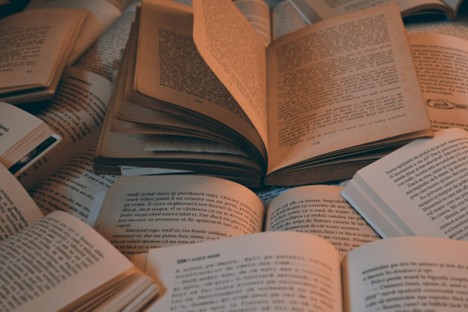
Cover photo by Vrînceanu Iulia on Unsplash. Free to use under the Unsplash License.
Leave a Reply